

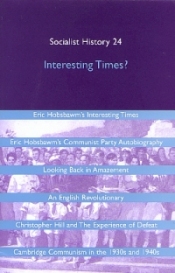
From the publicity surrounding the publication of Eric Hobsbawm's memoirs, to the television spy dramas and the posthumous 'exposé' of Christopher Hill, reminders of the links between commmunism and the universities of the 1930s are ever present. It is these particular aspects of Hobsbawm's 'interesting times' which provide the focus of this issue of Socialist History.
As well as an interview with Eric Hobsbawm by David Howell, the issue features a 'review of the reviews' of his autobiography by John Callaghan, and the first publication of a rather different type of autobiographical document: the short 'party biography' which Hobsbawm compiled for the organisation department of the British Communist Party.
Other Marxist historians of the same generation featured in this issue include Dorothy Thompson, Victor Kiernan, and Christopher Hill, with Dorothy Wedderburn, John Maynard Smith, Peter Worsley and others. Thompson and Kiernan feature in a compilation of oral and written recollections of their early lives by some of Hobsbawm's Cambridge contemporaries. Christopher Hill, who was master of Balliol, Oxford, is remembered in two contributions: one, by Ann Hughes, on his work as a historian, the other, by Martin Willis, on the issues raised by the allegations about Hill's communist and Soviet connections made immediately after his death.
The reviews section, focuses especially on political commitments made in the 'age of extremes' and the issue is rounded off by a discussion of Paul Lafargue's classic text The Right To Be Lazy by David Renton.