


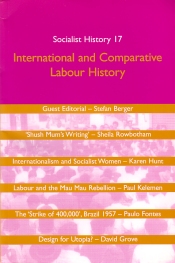
Why is there not more international and comparative labour history? As Stefan Berger points out in his guest editorial, labour movement historiography has only intermittently reflected the internationalism which the movement has traditionally professed. The articles in this issue suggest how fruitful a field for the labour historian international relationships and comparisons can provide.
While focussing on British working-class women, Sheila Rowbotham's discussion of the complex 'gendered class-consciousness' revealed in a rich vein of personal narratives raises theoretical questions of a much wider significance. Karen Hunt's article confronts more directly problems of internationalism and cultural transfer for British socialist women before the First World War.
Not only women faced difficulties abroad. In his discussion of the British Labour Party's policy towards Kenya, Paul Kelemen describes the party's adaptation, especially when in power, to colonialist imperatives barely distinguishable from the Conservatives'. All in all, it is a sorry tale.
Paulo Fontes, in the fourth main article, describes the Sao Paulo 'strike of 400,000' of 1957. He succeeds, according to Stefan Berger, in showing the way towards innovative qualitative methods for the comparative history of strikes.
The issue is completed by a recent talk on the Garden Cities movement by David Grove, and a reviews section concentrating on labour history themes.